Trail Skills
Reading Bear Signs on the Trail
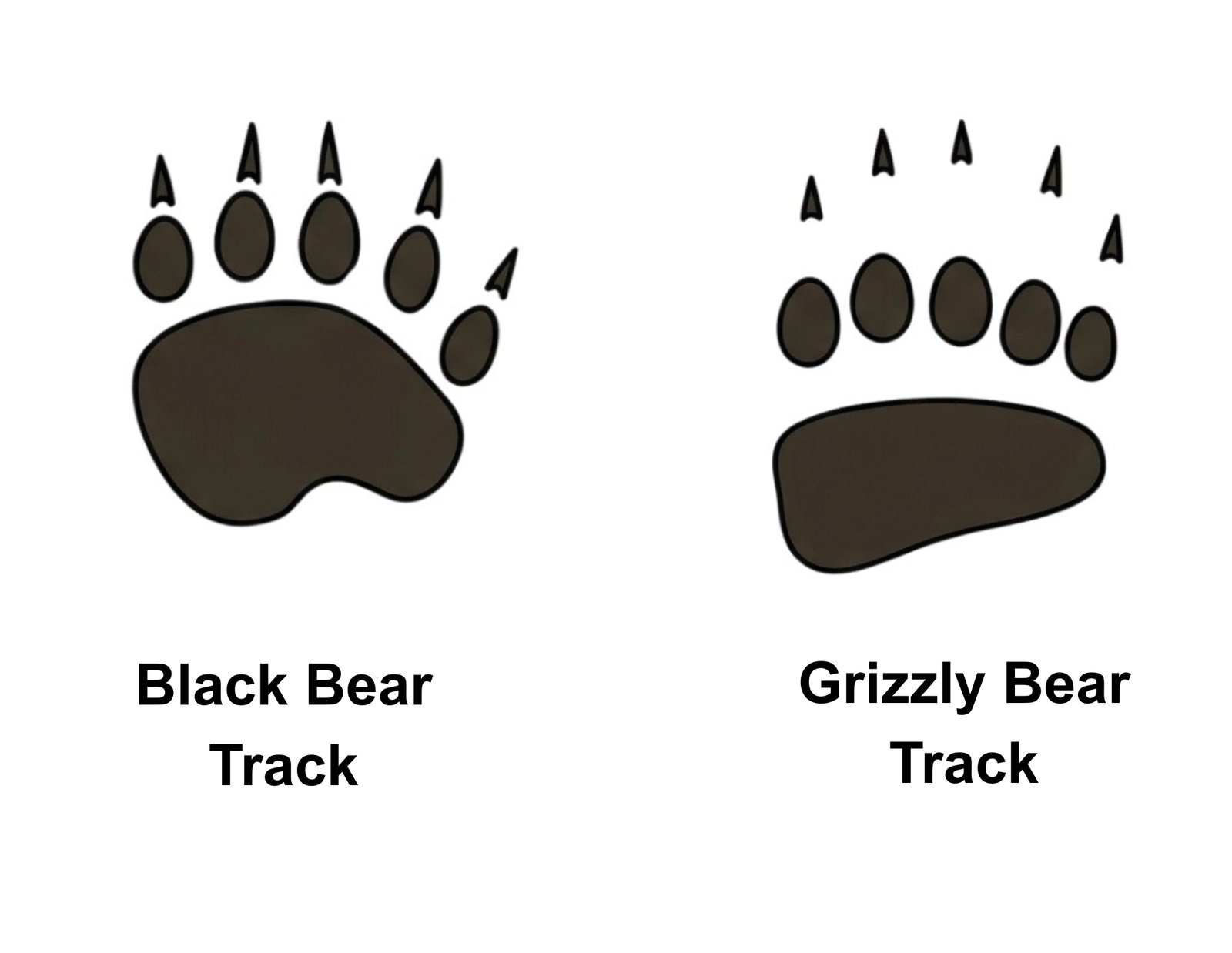
Tracks, scat, diggings, claw marks, and other field signs tell you bears have been active in the area. Knowing how to read them helps you make better decisions about whether to continue.
Scat (Droppings)
Bear scat varies widely depending on diet. Knowing what to look for can tell you what the bear was eating and how recently it was in the area.
Myth: "Scats wider than 2 inches are grizzly." This fails 58% of the time. In Banff, 58% of 104 measured grizzly scats were less than 2 inches in diameter. Do not rely on scat diameter alone for species identification.
Meat scat
Runny, black, and very smelly. May contain hair or bone fragments. This means a bear is feeding on a carcass nearby. This is a dangerous situation. Leave the area immediately.
Berry scat
May appear as red, blue, or purple splotches. Can extend up to 15 feet along a trail. Common in late summer and fall.
Vegetation scat
Fibrous, not particularly smelly. Made up of grasses, roots, and plant material. Most common in spring.
Garbage in scat
Plastic, foil, food packaging. This indicates a food-conditioned bear. Do not camp in this area. Report it to park authorities.
Freshness
Moist and soft means fresh (hours to a day). Dry and hard means older. Check the vegetation underneath the scat for yellowing. Insect larvae or eggs suggest the scat is several days old.
Diggings
Extensive digging for roots, bulbs, and tubers is a grizzly bear indicator. Black bears rarely dig for these foods. Diggings can range from a single scoop to areas over 100 square feet.
To judge freshness: uncover vegetation buried by the thrown soil. If it still looks fresh and green, the digging is recent.
Other Signs
Rub trees and mark trees
Look for bear hairs caught in bark, fresh sap from claw or tooth wounds, and shredded bark. Well-used mark trees often have foot holes worn into the ground leading up to them.
Turned-over rocks
Rocks flipped over for insects underneath. Both species do this.
Torn-apart rotten wood
Logs and stumps ripped open for insect larvae. Both species.
Claw marks on trees
Black bears leave claw marks from climbing. Grizzlies leave marks from reaching up. Height and width of marks can help with species ID.
Bedding areas
Three to ten scats within a 10-yard radius may indicate a day bed. Bears often rest in dense cover during the day.
Scavenging birds
Crows, ravens, and magpies circling or gathered in one area may indicate a carcass being shared with a bear. Approach with extreme caution or avoid entirely.
Moving bushes
Dense berry bushes shaking with no wind may indicate a bear feeding inside. Make noise and give wide clearance.
What to Do When You Find Bear Signs
- -Assess freshness. Recent signs (moist scat, fresh diggings, visible tracks) mean a bear may be very close.
- -Increase noise. Talk loudly, clap, or use a noisemaker.
- -If signs are concentrated and fresh, consider turning back or taking an alternate route.
- -Meat scat, a carcass, or circling scavenger birds are the highest-risk signs. Leave the area immediately.
- -Report concentrated bear signs to park staff so they can post advisories.
This guide is informed by Stephen Herrero's Bear Attacks: Their Causes and Avoidance (3rd Edition, 2018), Chapter 13: Signs of Bear Activity.