Essential
What to Do in a Bear Encounter
The correct response depends on two things: the species (grizzly or black bear) and the type of encounter (defensive or predatory). Getting this right can save your life.
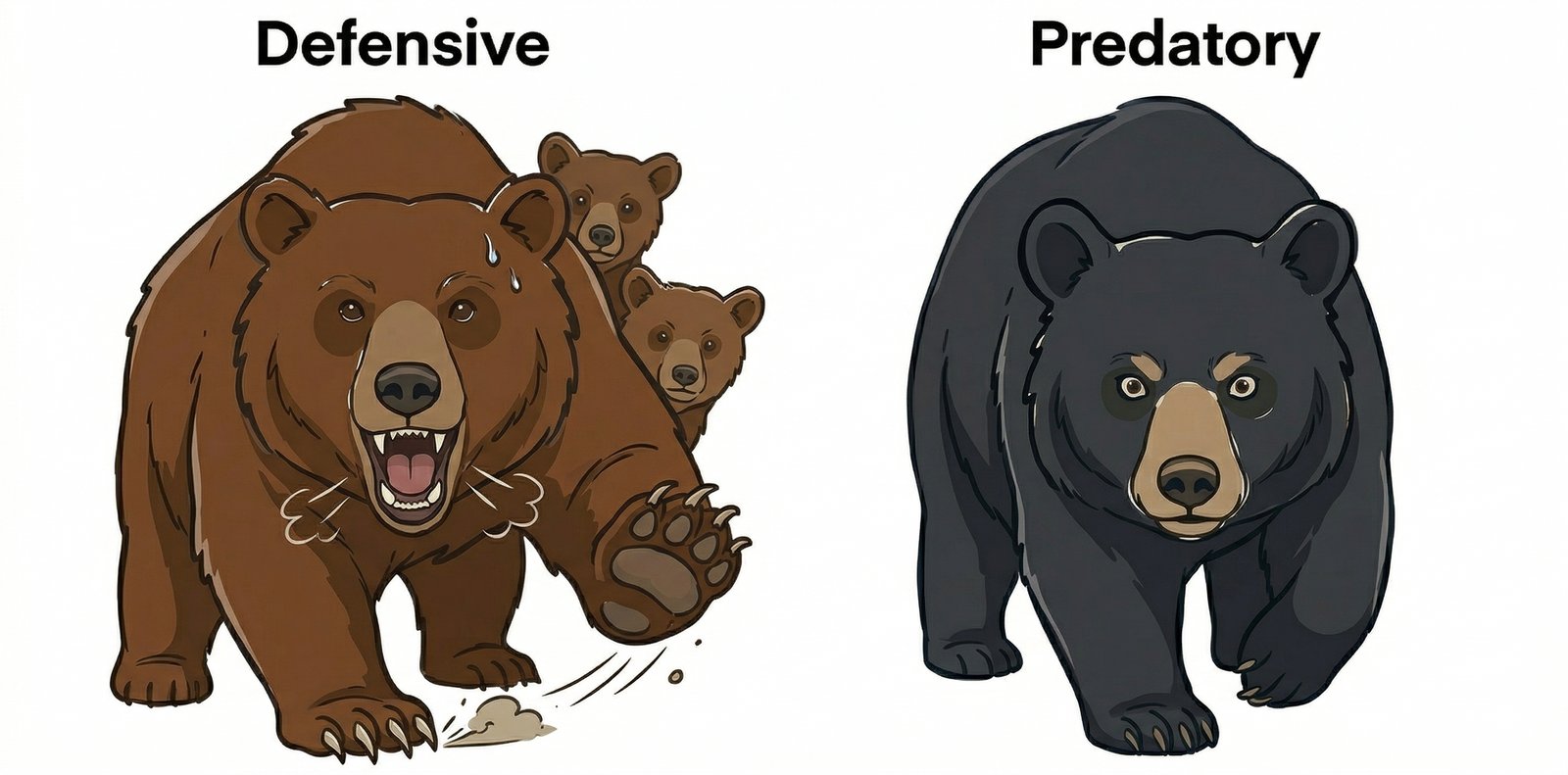
First: Identify the Situation
Before you respond, you need to assess two things quickly. Is this a defensive encounter (the bear feels threatened) or a predatory encounter (the bear is treating you as prey)? And is it a grizzly or a black bear?
Most bear encounters are defensive. The bear is surprised, protecting cubs, or guarding food. Predatory encounters are rare but require a completely different response.
Defensive Encounter
The bear is startled, has cubs nearby, or is protecting a food source. This is the most common type of encounter.
Signs: the bear charges with ears back, head down, jaw popping, swatting the ground. A mother grizzly with cubs who suddenly notices you at close range is in defensive mode. According to bear behaviour researcher Stephen Herrero, grizzly bear mothers with cubs are involved in the majority of sudden-encounter attacks.
What to do:
Stop moving. Do not run. Running can trigger a chase instinct. Bears can sprint at 55 km/h.
Speak in calm, low tones. This helps the bear identify you as human and assess that you are not a threat.
If you have bear spray, prepare it. Remove the safety. Aim slightly downward. Wait until the bear is within 6 to 8 metres before deploying in a 2-3 second burst.
If a grizzly makes contact: PLAY DEAD. Lie face down, hands clasped behind your neck, legs spread to make it harder for the bear to flip you. Keep your pack on for protection. Remain still and silent.
If a black bear makes contact in a defensive encounter: Playing dead usually works here too, but if the attack is prolonged (more than a minute or two), switch to fighting back. Black bears are less committed to defensive attacks than grizzlies.
After the bear leaves, wait several minutes before moving. Bears sometimes watch from a distance and may return if you get up too quickly.
Predatory Encounter
The bear is stalking you, following you, or approaches silently and deliberately. This is rare but serious.
Signs: the bear is focused intently on you, following you persistently, circling to get downwind, approaching at night or in a remote area, or showing none of the stress signals of a defensive encounter (no jaw popping, no ear flattening). As Herrero documents, predatory black bears are responsible for the majority of fatal black bear attacks.
What to do:
DO NOT PLAY DEAD. This is critical. Playing dead in a predatory encounter is the wrong response for any species. The bear is not trying to neutralize a threat. It is trying to eat you.
Make yourself look as large as possible. Stand tall, raise your arms, stand on a rock or log. Group together with other people.
Shout aggressively. Use a deep, commanding voice. Bang pots, throw rocks. The goal is to intimidate.
Deploy bear spray if the bear approaches. This is your most effective tool.
If the bear makes contact: FIGHT BACK with everything you have. Target the eyes and nose. Use rocks, sticks, trekking poles, anything. Do not stop fighting.
Do not climb a tree to escape a black bear. Black bears are excellent climbers. Grizzlies generally cannot climb trees, but can reach surprisingly high.
Quick Reference
Grizzly Bear
Black Bear
Bear Spray
Research consistently shows that bear spray is the most effective deterrent in a bear charge. Herrero and colleagues found that bear spray stopped aggressive behavior in 92% of cases involving grizzly bears and 90% involving black bears. It is more effective and safer than firearms for the average person.
How to carry and use bear spray:
- -Carry it on your belt or chest strap, not buried in your pack. You need it in seconds, not minutes.
- -Practice removing the safety clip before your hike. Fumbling under stress is common.
- -Aim slightly downward and deploy in a 2-3 second burst when the bear is 6-8 metres away.
- -Create a wall of spray between you and the bear. Spray in a slight side-to-side motion.
- -Back away while spraying. Do not turn and run.
- -Bear spray has a range of about 6-9 metres and lasts 6-9 seconds. Use it wisely.
- -Check the expiry date. Replace expired canisters. Do not take bear spray on aircraft.
This guide is informed by Stephen Herrero's Bear Attacks: Their Causes and Avoidance (3rd Edition, 2018), Parks Canada bear safety guidelines, and peer-reviewed wildlife research. It is not a substitute for proper safety training. Always carry bear spray in bear country and know how to use it.